

Future Classics #2 (December 2024)
Future Classics is a new online magazine / newsletter about the handpan culture. In our second issue: Mar Loi, Roman Reva (Omana Handpan), Kabeção.

Handpan Year 2024 in Review
It’s been a relatively quiet year for Future Rust, especially compared to last year’s massive projects, The End of the Beginning, and the Handpan Day Online Festival, but that doesn’t mean we’ve been idle!
In April, we released the Saltwater EP by Maja Wlazły. This collection of four minimalist handpan ambient tracks captures the poetic beauty of our connection to the ocean. We’re absolutely in love with this meditative and mysteriously soothing gem.
In May, we published the first issue of Future Classics. The idea of writing about handpan culture seems more relevant than ever, and next year, we plan to double down on our literary efforts. We aim to release at least four issues featuring interviews, reviews, and essays on handpan culture. If you’re a writer with an idea for this publication, we’d love to hear from you!
In October, the handpan world faced a wave of mixed emotions as the Bernese court ruled in favor of PANArt in a major copyright lawsuit. The court granted the Hang a copyright on its design in Germany, Switzerland, and the Netherlands. However, there is still significant uncertainty about what this means in practice. What’s clear is that the process has been incredibly stressful and financially burdensome for the handpan community.
On October 5th, we celebrated the sixth International Handpan Day. Moving the event to the first Saturday of October has made it easier for people to organize their own Handpan Day events. While we skipped hosting a large online event this year, we hope to bring it back in 2025, bigger than ever.
This autumn brought one of the most exciting handpan news stories to date: the collaboration of two of our favorite Davids — Charrier and Kuckhermann. They’ve merged their platforms, Master the Handpan and Handpan Dojo, which have been the two most successful online schools for handpan education. Exciting times for everyone who enjoys learning to play handpan online!
On the day this issue of Future Classics is released, we’re thrilled to share a special new music release. MARKETA’s new single Transit Through the Sun closes the year with the warmest sonic hug you can imagine.
Marketa Drozdkova (half of the exceptional duo MEA) describes it as a song that was never meant to be recorded. "I wish that this song brings us a few rays of light we might need to cocoon, reflect, rethink, shed, renew, recharge, and emerge with clarity during this dark time of the year", she writes on her social media.
Transit Through the Sun is the first single from MARKETA’s forthcoming album Softer, which will be released by Future Rust in early 2025. You can listen to the single here.
One reason for our quieter year is the significant work happening behind the scenes. We’ve invested countless hours in planning, negotiations, writing and reviewing contracts, and forging new partnerships. Most importantly, we’re finally evolving into a label that can offer more comprehensive support to artists at various stages of their careers. Small steps, but one day everything will make sense...
In this issue, we interviewed Mar Loi, whose contemplative and creative album Grises was released at the end of 2023, and Roman Reva from Omana Handpan, who has relocated to Slovakia with his family due to Russia’s invasion of Ukraine.
Finally, we’re delighted to review the second song ever to earn the honorary title of Future Classic: Astronaut by Kabeção.
(Text by Lauri Wuolio)
Issue 2 Soundtrack
Here’s what we’ve been listening to while writing this issue:
MARKETA: Transit Through the Sun
Mar Loi: Homeostasis
Roman Reva: Autumn Moods
Bobay Beats, Kabeção: Astronaut - Remix
Mila Urban: sNEZHNOST (Intro Version)
Maja Wlazły: Cyan
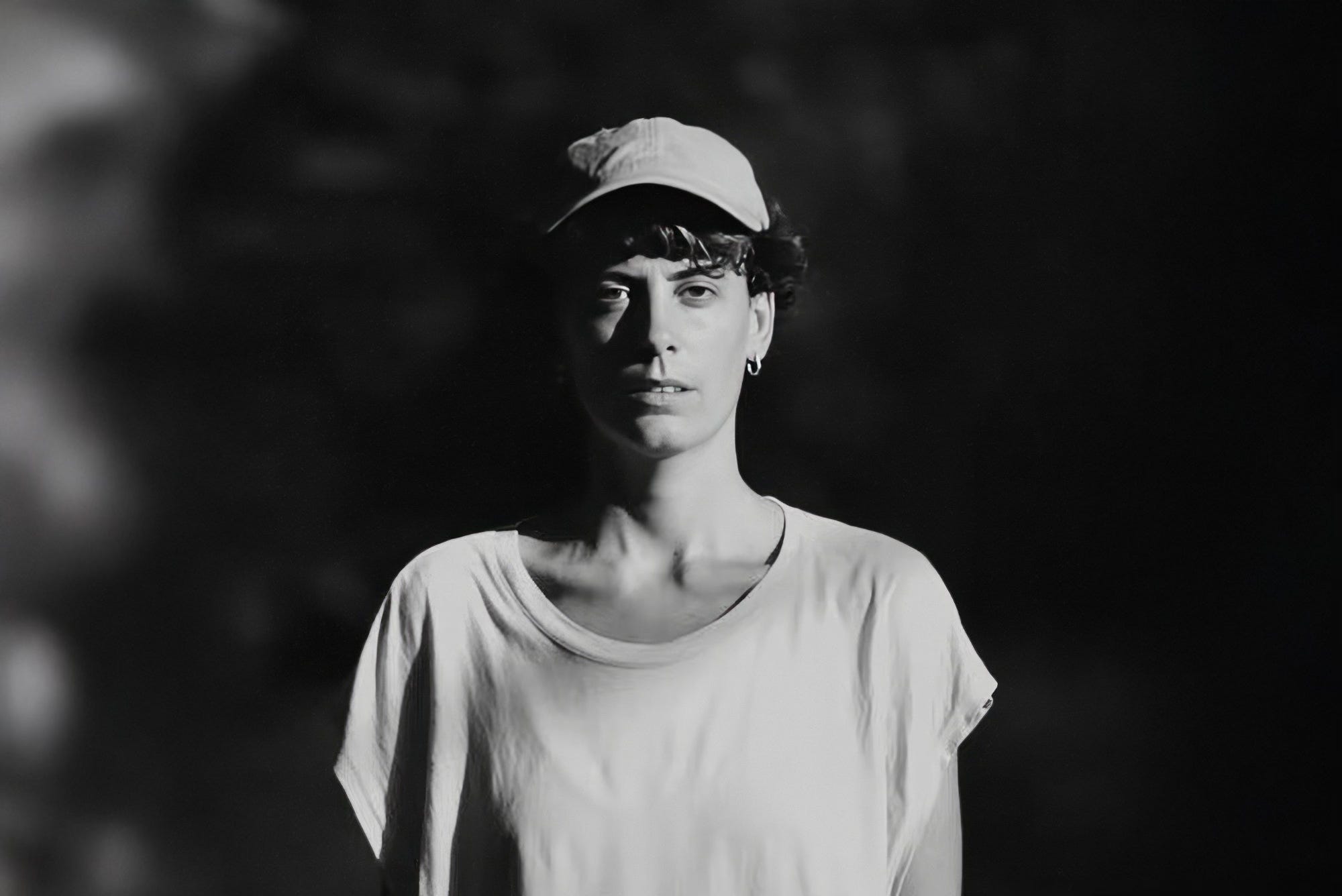
Interview: Mar Loi
Your debut album, Grises, came out last year. Can you tell us a little bit about the process of creating it?
It was 2020, during the lockdown, when I experienced a huge shift in my playing and my approach to composing. Before that, I had been enjoying the early days of my handpan journey—three years since getting my first handpan in 2017 (a Sunpan, by the way). I spent my days in my room, playing endlessly, exploring the instrument, practicing movements and rhythms, busking on the streets of Barcelona, and immersing myself in the European handpan festivals, meeting players from around the world. It felt like a very happy childhood.
Then 2020 came, and I was finally set to perform at handpan festivals for the first time—places like GRIASDI, Pantribe, and even in Japan. You can imagine how I felt when all of that was canceled. After years of dreaming and seeing my name on those lineups, it was heartbreaking. That’s when I experienced what I now call “the birth of my dark side” (haha). I was angry, deeply sad, and overwhelmed.
I remember the beginning of Homeostasis came to me during that time. I played it non-stop throughout lockdown. It became the musical reflection of my search for balance in the midst of chaos. Homeostasis means “a state of balance among all body systems needed for survival and proper functioning.” The album title, Grises (Spanish for “gray”), reflects this period—a mix of frustration, powerlessness, hope, freedom, and reconnecting with friends and family. It was a gray time, full of contrasts.
In 2022, I began working with the album’s producer, Vic Moliner. Together, we gave the music the format I envisioned: handpan compositions infused with soundscapes from the creation process, like the voice of my niece in the track Lena, or the documentary-like feel of Hierro. We added soft percussion, piano, bass, and synths. Now, Vic and I are performing Grises live as a more complex and innovative experience. I’m loving this new chapter.
Many of your songs seem to have very personal stories, but listeners don’t always know what they’re about. What role does narrative play in your music?
For me, the narrative in music is really subjective. It’s nice to know the story behind a composition, but that can shape or even limit a listener’s own impression—their own “sound picture.” When we listen to music, it sparks reactions in our bodies that are tied to our life experiences, our ability to feel, and how we process emotions, right? I think that personal reaction is so valuable.
Sometimes, a listener’s interpretation aligns with my story as the composer, and sometimes it doesn’t—and that’s funny to me. Sharing the stories behind my music is a very intimate thing, so I’ve started carefully choosing when to reveal them and when to leave them untold. It’s my way of honoring each story.
You’ve attended several handpan festivals this year. Any special moments you’d like to share? How important are these events for the handpan community?
This year has been tough for me personally, with lots of changes, which made my time at festivals feel different. Still, when I close my eyes, some beautiful highlights come to mind.
At the Wild Naya Handpan Summer Academy in Germany, I invited Samantha and Jaron from Archer & Tripp to perform Hierro with me during my concert. It was magical. Another great moment was playing Aurora with Kabe—we spent some special time rehearsing before the show.
In Naxos, during the HONA Handpan Festival, I performed with my friend Amarok under the night sky. It was unforgettable. And it’s always overwhelming to see how many people are eager for one-on-one lessons during these gatherings.
These festivals are the soul of the handpan culture. They’re where you reconnect with friends you haven’t seen in a year, meet people you’ve admired for ages, and step away from screens to connect with real people who listen to your music. It’s all about real-life connections.
What are you working on now? New music or live shows?
Right now, I’m finalizing events and workshops for 2025, including handpan academies and live performances. I’m also scheduling time to create new projects!
Vic Moliner and I are preparing to perform Grises at next year’s HONA and Swiss Handpan Festival, and I couldn’t be happier about that. There’s also a good chance a new album will be released by the end of 2025. Stay tuned!
Grises by Mar Loi is out on Future Rust. Get the album from Bandcamp or listen to it at any major streaming platforms.
(by Lauri Wuolio)
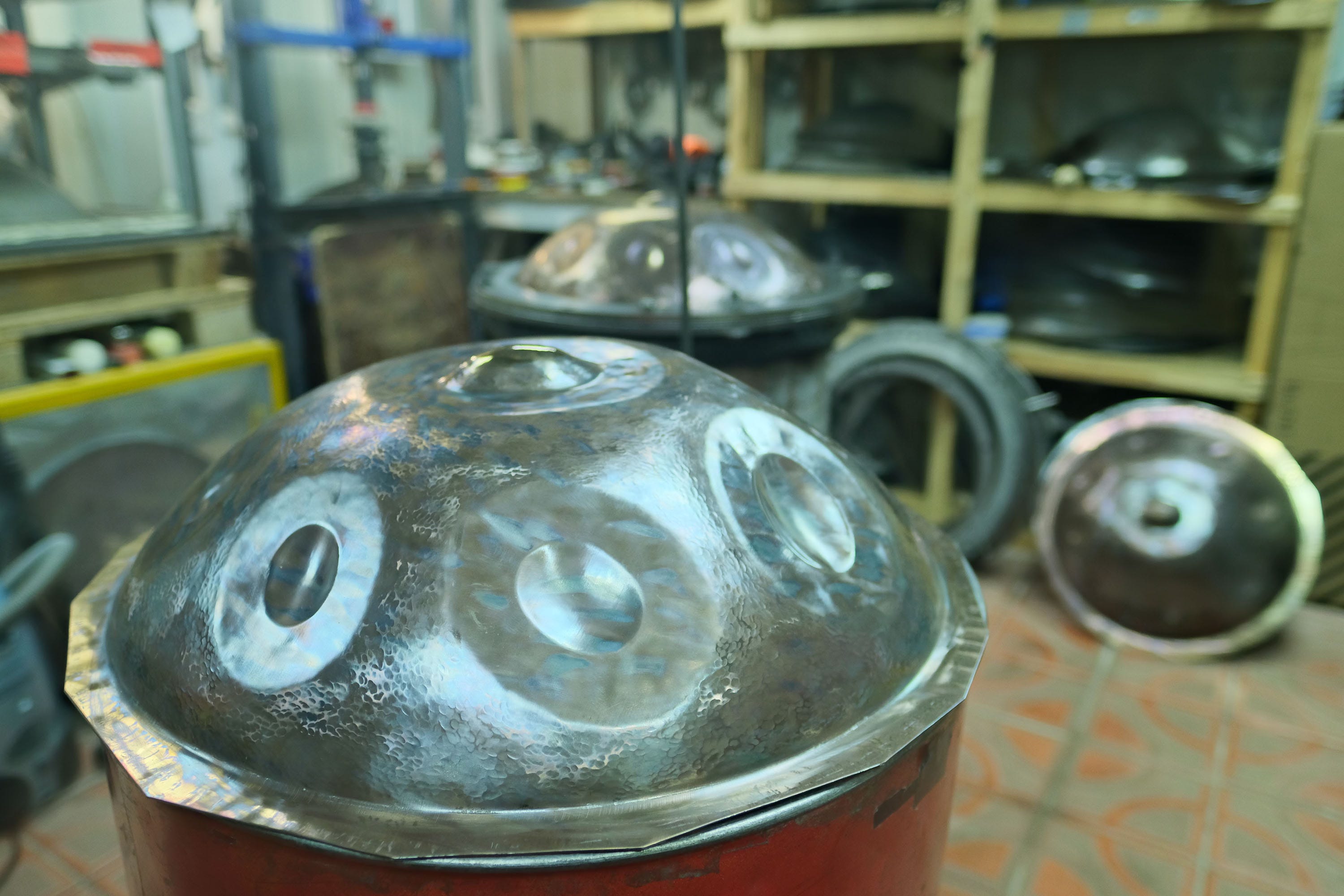
Interview: Roman Reva (Omana Handpan)
The war has raged in Ukraine for more than two years. Amidst all this turmoil, the Ukrainian handpan community has continued to create instruments and music. We interviewed Roman Reva from Omana Handpans to hear his story.
Last time we spoke, you had moved to Slovakia. Are you still in Slovakia? How is the Ukrainian handpan community doing these days?
Yes, we moved to Slovakia, and we are still here. We are now in the process of obtaining the necessary documents to stay here long-term. My wife and I came here in June 2023. This spring, my brother Anton and his family joined us as well. It was important for us to keep the family together and to continue our work at OMana.
As for the Ukrainian handpan community—it is still alive. People continue to make music and create handpans and handpan-type instruments, despite everything that is happening in our country. Of course, it is a very difficult time.
Are you currently able to build instruments in Slovakia? How does the war affect your work?
Yes, we have been able to continue working. Even when Anton and I lived far apart, we managed to work together remotely until his family could join us in Slovakia.
The war has deeply affected our work. It is a real tragedy, not only for us but for so many people who had to abandon their homes. That feeling of not having solid ground beneath your feet—it’s overwhelming. The only thing that keeps you going is work. It helps distract from the darker thoughts.
We haven’t been able to return to our hometowns for three and a half years now; it’s simply too dangerous.
Your wife Mila Urban is a wonderful musician. Has she kept making music throughout this time?
Yes, Mila continues to make music whenever inspiration strikes her. For her, compositions seem to flow out of nowhere, and within two to four days, a piece can be finished. She plays a lot and enjoys learning from other musicians.
She also takes time to learn well-known themes, like Game of Thrones or Children by Robert Miles. Right now, she’s spending a lot of time exploring and learning new songs.
Obviously, the war is a horrible backdrop for anything, but I’ve seen some Ukrainian handpan players post videos and music during the war. Do people have time and energy for handpans or music? What role does music play in these circumstances?
Music plays a vital role during such dark times. It offers a moment of peace, a way to cope, and even a sense of resistance. For those who can find the energy, it becomes a way to stay connected to life and beauty despite the chaos around them.
When Russia invaded Ukraine in 2022, we released a compilation to support the Ukrainian handpan community. What kind of support would you like to see today from the international community?
When the war started, we received a lot of support from handpan makers and musicians around the world. They helped many Ukrainian families who had to leave their homes, and their assistance came at exactly the right time.
We cannot ask for more because what they did was already more than enough. We deeply appreciate it. It was so heartwarming to see the handpan community come together. It made us feel like we weren’t alone.
Any other thoughts you’d like to share?
Right now, we are reassembling our workshop in a new location. Thank God, we are finally together with Anton and his family and have the opportunity to make quality handpans again.
We are so grateful to everyone who helped us rebuild our production almost from scratch. Throughout this journey, we’ve met so many good people—people who helped us regardless of politics, religion, or nationality.
We thank them all. And may God bless them!
Listen to Contra Spem Spero — A Compilation of Ukrainian Handpan Music
(Text by Lauri Wuolio)
Future Classic: Astronaut by Kabeção
If you listen to Handpan, you’ve certainly heard the music of Kabeção by now. If you haven’t, what are you waiting for? Hop onto your favorite music platform and go treat your ears to some sonic bliss. There are a handful of handpan artists out there whose music has touched the hearts of listeners worldwide, and Kabeção is one of them who stands out the most. His playing is the perfect blend of soul and technicality. Kabeção’s wide catalog of music certainly has a lot of Future Classics, but one of them in particular stands out as a defining moment in all things Handpan, and that song is Astronaut, played on the infamous Low F2 Pygmy.
My first introduction to the magic of the Low F2 Pygmy Yishama was Kabeção’s Great Wall of China video playing his song Astronaut on this genre-redefining instrument. The song opens up with a timeless exploration of the deep low tones of the ding on the Yishama, and immediately lets the listener know that you’re about to go on a journey. The song’s intro draws the listener into a hypnotic trance, inviting you to relax, drop whatever distractions are holding your attention for the moment, and coaxes you along as you arrive to the first melodies of the song.
As the song begins to blossom, the melodies of Astronaut begin to appear, creating a dreamy, almost weightless ambiance, evoking the feeling of drifting through space. The beauty of this song is in its apparent simplicity, as well as the emotional journey it takes you on. Kabeção’s playing seems effortless, as if he is allowing the instrument to express itself through him, yet it exhibits a high level of technical proficiency. His playing lets the instrument breathe, open up, and share its magic with the listener. While floating away on these incredible melodies, the deep tones of the Low F2 Pygmy keep the listener grounded in their inner world, while allowing the spirit to soar.
Astronaut doesn’t end with the Great Wall video, however, as we were gifted with the Freedom Expressions Studio Sessions video nearly a year and a half later, offering a higher quality recording of this incredible piece of music. This time around the song has grown and matured, and Kabeção offers us a sixteen minute rendition of Astronaut, recorded in a higher quality studio setting. Every time I listen to this song feels like an exploration of solitude and wonder, perfectly capturing the vastness and mystery of the cosmos. Its emotional depth and immersive soundscape make Astronaut a standout piece, inviting listeners to get lost in its orbit. Whether you’re just learning about this Future Classic for the first time, or you’ve listened to it 1,000 times, it is time to go put on your favorite set of headphones and get ready to blast off!
(Text by Jeremy Arndt)
Contact
You can comment anything here on Substack, or send us email at classics@futurerustrecords.com! We want to hear from you!